
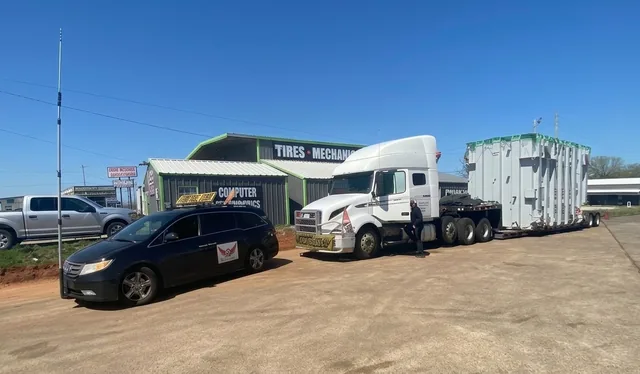
How a high pole works
FHWA's guidance on special challenges says that when loads are tall, the lead operator must use a height pole, and that if a state requires one it is typically specified on the permit. The pole checks bridges, power and utility lines, signs, traffic lights and other overhead obstructions. The operator drives ahead of the load and warns the driver if the pole makes contact, so the load can stop in time.
How the pole is set
FHWA says the established best practice is to set the pole from 3 to 6 inches above the tallest part of the load. The operator measures the load, sets the pole with the load driver's help, and confirms the height with the driver. States vary on how the pole is installed, so check the rules for the states on your route.
The pole should be made of a non-conductive, flexible material and securely mounted, according to FHWA. The operator needs an unobstructed view of the pole and enough distance ahead of the load to warn the driver and get the load stopped.
When a high pole is used
FHWA notes that in many states a load is considered over-height once it is taller than 13 feet 6 inches, though western states frequently have higher thresholds. Your permit is what counts. Mississippi DOT's over-dimensional permit rules are one example: they list an escort with a height pole among the safety measures a permit may require, and for super loads taller than 16 feet they require written permission from utility and railroad companies.
What a high pole does not replace
A height pole is a check, not a plan. The route itself should already be reviewed for overhead obstructions, and FHWA recommends checking the route survey for utility lines, overpasses and other clearances before the move. The pole confirms what the route survey says, and catches what it missed.
Booking a high pole escort
Tell us the loaded height and the route and we will help you confirm whether your move needs a high pole car. See our high pole pilot car service or request a quote. You may also want to read lead vs. chase and route planning basics.